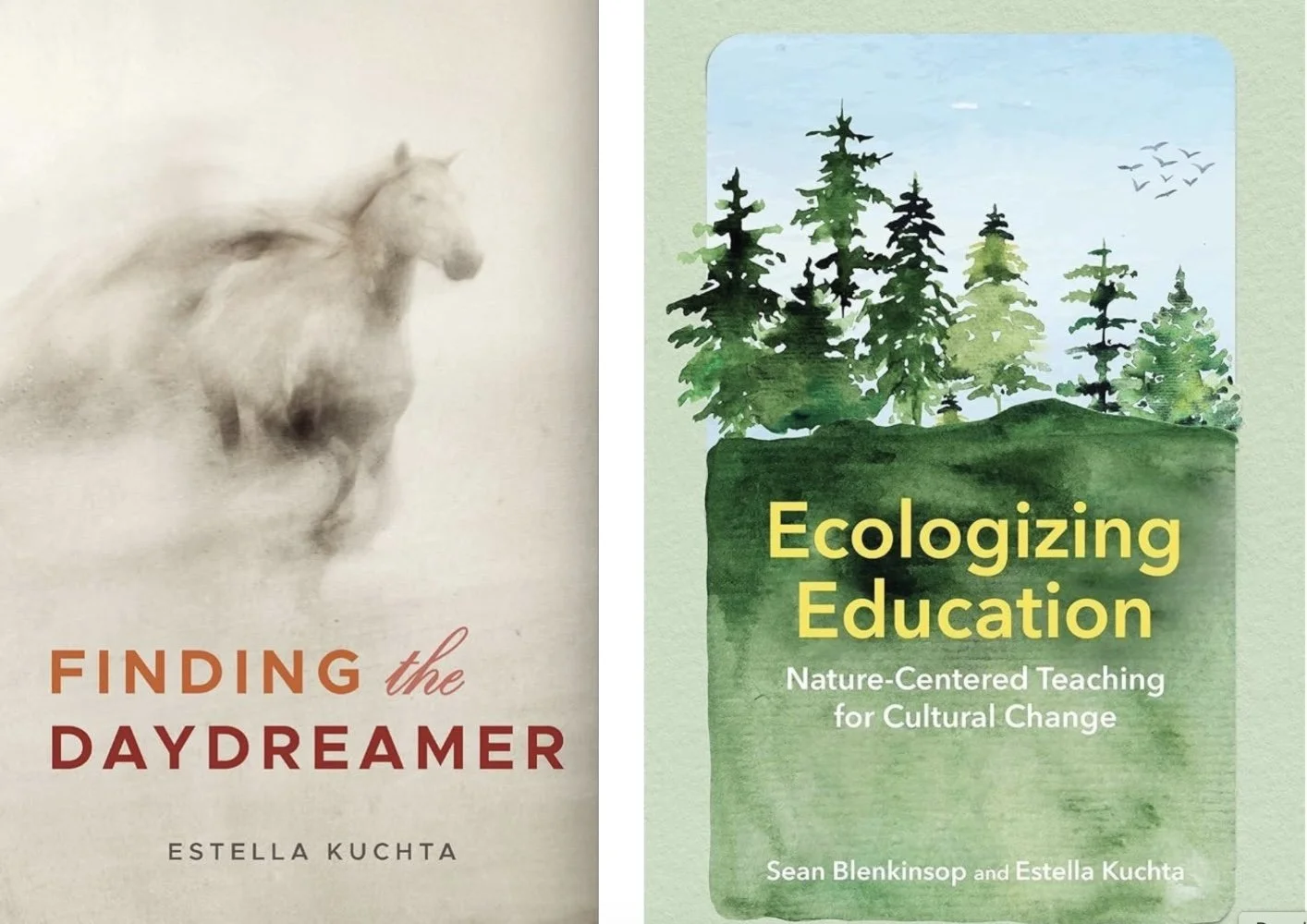
Praise for Finding the Daydreamer
With grace and poetic insight, Finding the Daydreamer explores the power of imagination and the prescience of the heart. It is a page turner, a love story, a profoundly affecting book.
—Donna Kane, author of Summer of the Horse
This beautiful and poetic story is a quick wind moving through the imagination. It arises out of the memory and dream of the obligations to life in right relationship. Its insights both color and cut through the layers of forgetting brought upon this continent, the forgetting brought by control of women, water, land and sky, all the doorways to life. Its clear and vivid images of people moving in the surrounding world of Nature reveal the layers of that obsession, and at the same time they lead the way to the necessity of remembering a better, truer way to be. The brilliant young mother at the heart of the story, the storyteller herself, gives testimony to the insistence and courage it takes to find and live a life of dignity, trust, and respect. In this, she keeps the dream alive of what it means to be truly human, which is to love.
—Stan Rushworth, Citizen of the Chiricahua Apache Nation, author of Going to Water: The Journal of Beginning Rain.
Praise for Ecologizing Education
My heart sang when I read Ecologizing Education! The writing feels like the warm embrace of a loving family member. Poetically, it introduces us to the kind of education that cultivates relationally- and ecologically-connected persons, planetary citizens who develop know-how for transforming culture toward ecological and social justice. Attuned to the particular location, circumstances, ecosystem and individuals, it is a localized form of ecological education. The book calls us all to action, to joyful authentic learning with our more-than-human kin. Every reader will benefit from the book and will be inspired to ecologize their lives, whatever their path.
—Darcia Narvaez, coauthor ofRestoring the Kinship Worldview
Ecologizing Education is a profoundly hopeful book and antidote to the discomforting danger and apathy of these precarious times. Through beautifully crafted prose, the authors stand with collaborators—Huckleberry and Hermit Crab, Bull Kelp, and Bald Eagle—and challenge educators, learners, parents, and administrators to think big, root-level cultural change. Imagine a publicly funded school with no building—just forests, meadows, and ravines. And then ask, How far are you willing to go?
—Bob Jickling, Professor Emeritus at Lakehead University
Quisque iaculis facilisis lacinia. Mauris euismod pellentesque tellus sit amet mollis.